
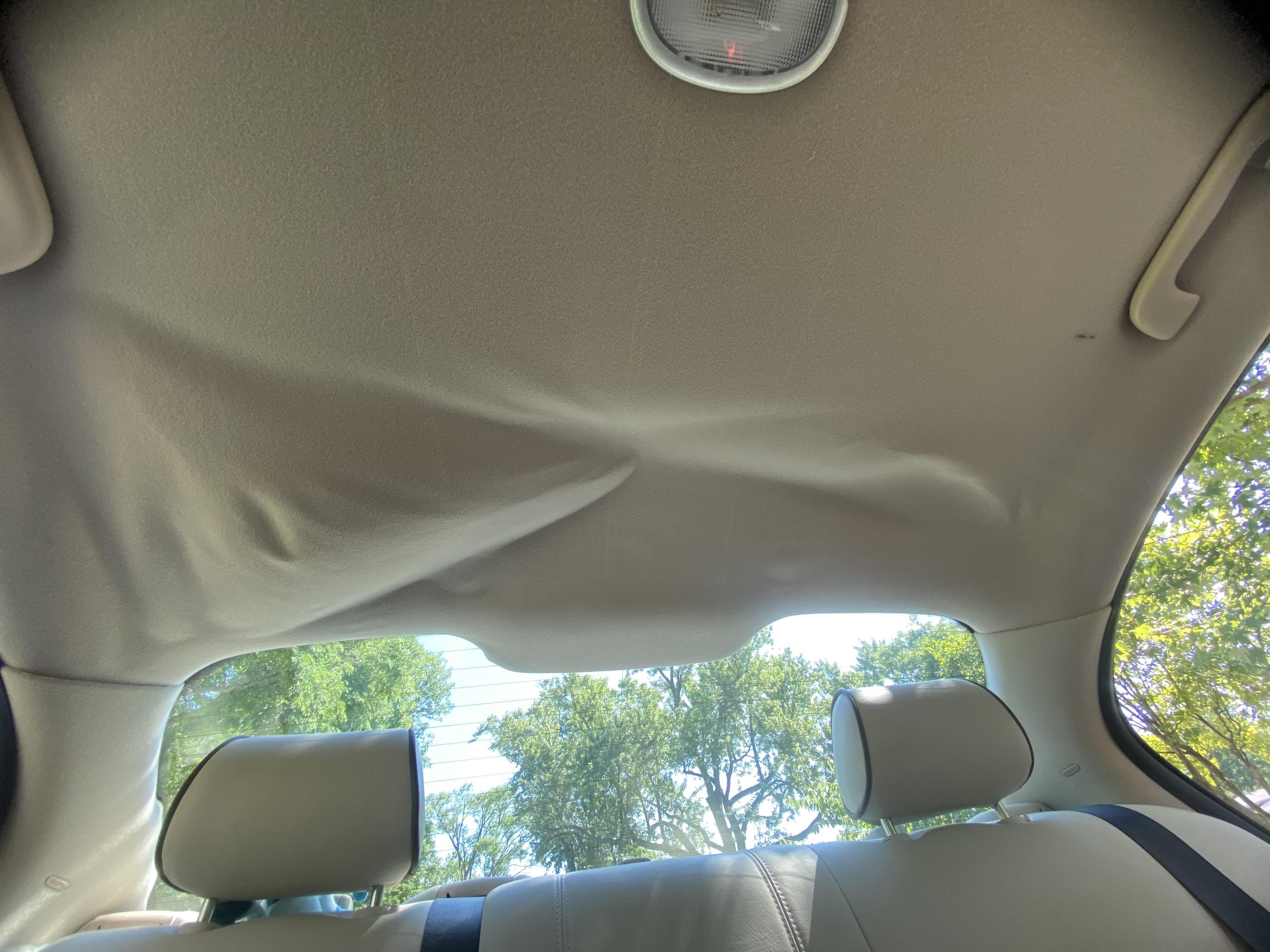
A loose headliner often starts with a small sag near an edge, visor, or overhead light. Once the adhesive-backed foam behind the fabric deteriorates, the loose area can spread quickly. Early inspection can help determine whether a localized repair is possible or the entire headliner needs recovering.
Why Headliner Fabric Starts Sagging
Most headliners aren’t simply fabric glued directly to the roof. They commonly use fabric bonded to a thin foam layer, which is attached to a molded backing board.
Heat and age can weaken that foam until it turns powdery. General vehicle upkeep guidance may encourage regular interior inspection because problems that look cosmetic can become distracting once material hangs into the driver’s view.
A failed foam layer also explains why pushing the fabric back into place often doesn’t last. The adhesive may be sticking to deteriorated foam rather than a stable surface.
Identify How Much Material Is Loose
Begin by checking the edges around doors, sun visors, grab handles, dome lights, and rear glass. A small separated corner is different from a headliner that has detached across half the roof.
If the center section is dropping, a temporary localized fix may leave visible wrinkles. Owners comparing different automotive interior solutions should consider how widespread the adhesive failure is before choosing a repair method.
Avoid pulling loose fabric aggressively. Doing so can separate material that is still attached and make the damaged area larger.
| Headliner Problem | Likely Situation | Possible Approach |
|---|---|---|
| Loose edge | Small adhesive failure | Local repair may work |
| Sagging center | Wider foam deterioration | Recovering may be better |
| Fabric falling down | Advanced separation | Full repair often needed |
| Stained backing | Moisture may be present | Check for leaks first |
Choose Temporary Fixes Carefully
Pins, clips, and specialty fasteners can hold fabric temporarily, but they may leave visible marks. They are better considered short-term solutions than true restoration.
Broader vehicle interior information can help frame cosmetic repairs as part of routine ownership, but materials and roof designs vary widely between vehicles.
Spray adhesive can work in certain localized situations, yet it must reach a stable surface. Applying glue over crumbling foam usually produces a short-lived repair because the weakened material continues separating underneath.
Removing the Board Can Produce Better Results
For widespread sagging, professional or careful DIY recovering usually involves removing trim pieces, lowering the backing board, stripping away deteriorated foam, and applying new headliner material.
The board can be fragile, especially in older vehicles. Bending it too sharply during removal may crack it, turning a fabric problem into a larger repair.
Common Headliner Repair Mistakes
One mistake is spraying adhesive through the visible fabric and expecting an invisible repair. Excess glue may soak through thin material, create hard patches, or leave discoloration.
Ignoring the reason for the failure can also waste effort. If water has entered through a roof seam, sunroof drain, antenna mounting point, or weather seal, new fabric may become stained or damaged again. Solve moisture problems before installing replacement material. And don’t obstruct airbags, wiring, or other roof-mounted safety equipment during a repair.
Frequently Asked Questions
Can a sagging headliner be glued back up?
Sometimes, especially when separation is limited and the underlying material remains stable. If the foam has deteriorated across a large area, new adhesive alone may not provide a durable repair.
Is a sagging headliner dangerous?
A minor sag is usually cosmetic, but hanging material can become distracting or obstruct visibility if it drops near the driver’s head or windshield. Loose material should be addressed before it reaches that point.
Why does headliner fabric sag more in hot climates?
High interior temperatures can accelerate deterioration of aging foam and adhesive. Vehicles parked in strong sun for long periods may therefore develop headliner separation sooner than vehicles kept in cooler or covered conditions.
Fix the Cause, Not Only the Hanging Fabric
A sagging headliner rarely improves on its own. Inspect the size of the loose area, look for signs of moisture, and decide whether a localized repair or complete recovering makes more sense. Addressing deterioration early can prevent fabric from dropping across larger sections of the roof.