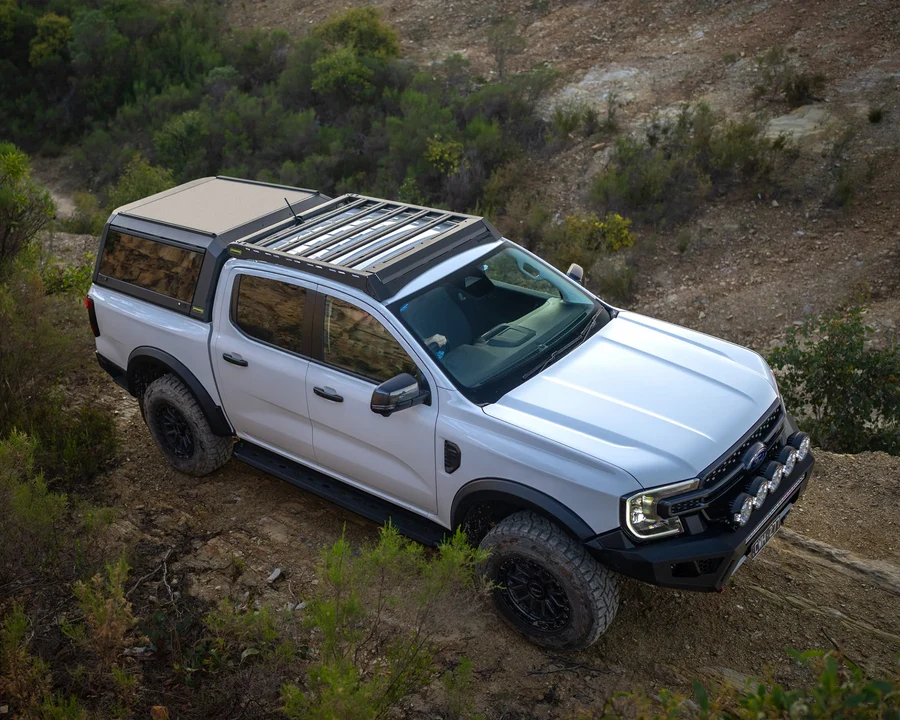
Roof racks are useful when carrying bicycles, luggage, kayaks, cargo boxes, or work equipment, but they can also increase aerodynamic resistance. Leaving unused accessories on the roof means the vehicle continues pushing them through the air long after the trip that required them has ended.
Removing unnecessary equipment can therefore support better fuel economy while also reducing wind noise.
Why Roof Equipment Changes Aerodynamics
As a vehicle moves forward, air must flow around its body. Manufacturers shape roofs, mirrors, spoilers, and other surfaces partly to control this airflow.
Crossbars, baskets, bicycle carriers, and cargo boxes interrupt that smooth path. The effect becomes more noticeable as road speed increases because aerodynamic resistance becomes increasingly important at higher speeds.
Empty Racks Still Affect Airflow
A roof accessory does not need to be carrying anything to create resistance. An empty basket or unused crossbar can still disturb airflow.
That makes permanent installation convenient but not always efficient.
Decide Which Accessories Need to Stay Installed
Some drivers regularly use roof equipment, while others need it only a few weekends each year. Consider how often each accessory actually earns its place on the vehicle.
General automotive setup references can be useful reminders that accessories affect more than appearance. Weight, airflow, installation quality, and intended use all matter when deciding what should remain attached.
If removing the entire rack is inconvenient, detachable carriers and cargo boxes are often the first components worth taking off between trips.
Store Removed Equipment Properly
Removing a rack only helps if reinstalling it later remains straightforward. Keep mounting hardware together, protect locking mechanisms, and store large accessories where they will not become warped or damaged.
Organized roof-accessory storage ideas fit naturally into a garage routine. Labeling bolts, keys, clamps, and adapters can prevent frustration when the accessory is needed again.
| Roof Item | When It Helps | When to Remove It |
|---|---|---|
| Cargo box | Luggage trips | After travel |
| Bike carrier | Bicycle transport | Between riding trips |
| Roof basket | Bulky cargo | When regularly empty |
| Crossbars | Accessory support | If easily removable |
Check Installation Before Every Major Trip
Roof equipment should be installed according to the accessory and vehicle manufacturer’s instructions. Loose hardware can create noise, movement, or safety problems.
Drivers browsing broader vehicle styling resources should avoid treating roof hardware as decoration alone. Any component exposed to highway airflow needs secure mounting and appropriate loading.
After reinstalling equipment, check attachment points before departure and again during a long trip if the manufacturer recommends it.
Mistakes That Reduce the Benefit
Removing a roof rack and then filling the trunk with unnecessary heavy items solves only part of the efficiency problem. Vehicle loading should be considered as a whole.
Another mistake is repeatedly installing and removing complicated hardware without following instructions. Damaged fasteners, overtightened clamps, or missing parts can create bigger problems than the fuel saved.
Convenience matters too. If an accessory is used almost every day, constant removal may not be worth the effort. Concentrate on equipment that spends long periods unused.
Frequently Asked Questions
Does an empty roof rack affect fuel economy?
It can. Empty racks, crossbars, and carriers still interrupt airflow around the vehicle. The effect varies with accessory design, vehicle shape, driving speed, and other conditions.
Should roof crossbars always be removed?
Not necessarily. Fixed systems may be designed to remain installed, while removable crossbars can sometimes be taken off when unused. Follow the vehicle and rack manufacturer’s instructions.
Do cargo boxes create more drag than crossbars?
Cargo boxes present a larger surface to moving air, so they can have a greater aerodynamic effect in many situations. The actual impact depends on their shape, position, vehicle, and speed.
Keep Useful Equipment Useful
A roof rack earns its place when it is carrying something you genuinely need. Once the trip is over, unused carriers and boxes may become extra aerodynamic baggage.
Review what is sitting on the roof, remove equipment that will not be needed for a while, and store it carefully. Efficient driving sometimes begins with taking something off the vehicle rather than changing how you drive.