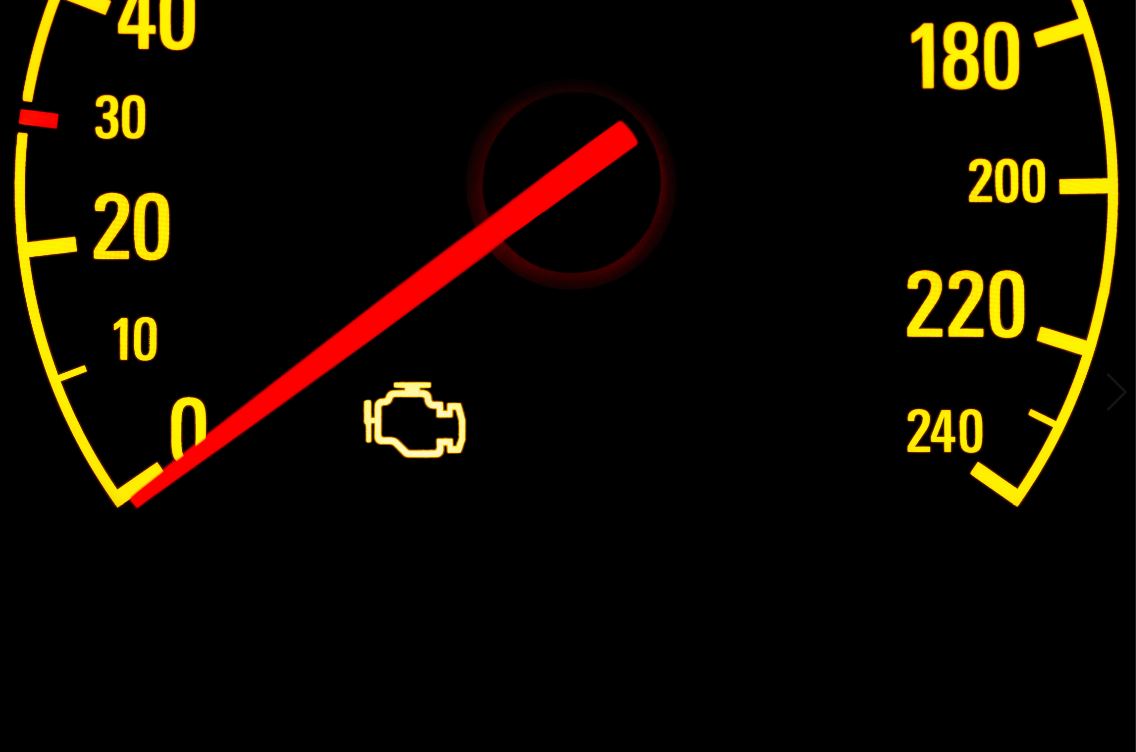
A check engine light means the vehicle’s computer has detected a fault that deserves attention, but it doesn’t automatically identify the failed part. The smartest first move is to note how the vehicle is running and retrieve the stored diagnostic trouble code. That information can narrow the investigation and help determine whether the car should continue being driven.
Pay Attention to Whether the Light Is Steady or Flashing
A steady check engine light often indicates a problem that requires diagnosis but may not demand an immediate roadside stop. A flashing light is more serious because it can accompany an active misfire capable of damaging the catalytic converter.
If the engine shakes badly, loses substantial power, produces smoke, or develops unusual noises, reduce your risk by stopping somewhere safe instead of trying to finish the trip.
Notice What Changed at the Same Time
Think about what happened immediately before the warning appeared. Recent fueling, maintenance work, a rough start, poor acceleration, unusual fuel consumption, or a noticeable misfire can all provide useful diagnostic context.
Those observations won’t replace code scanning, but they can help separate an intermittent warning from a fault that is actively affecting engine operation.
Retrieve the Diagnostic Trouble Code
An OBD-II scan tool can read stored codes on most modern vehicles. The code identifies a system or condition detected by the computer; it does not always mean the component named in the code description must be replaced.
People researching warning lights may compare automotive diagnostic reading with their owner’s manual and scan results. The strongest approach is still to treat the code as a starting point and test the affected system before buying parts.
| Warning Pattern | What It Suggests | Next Move |
|---|---|---|
| Steady light | Stored engine fault | Scan soon |
| Flashing light | Serious active problem | Reduce driving |
| Light plus rough idle | Possible misfire | Diagnose promptly |
| Light after fueling | Possible vapor-system issue | Check fuel cap |
Avoid Replacing Parts Based on a Code Alone
A code can be triggered by wiring faults, vacuum leaks, damaged connectors, sensor problems, fuel-delivery issues, or another component affecting the same system. Replacing the first part mentioned by a scanner can waste money while leaving the actual fault untouched.
Broader engine warning resources can help explain terminology encountered during research. Testing voltage, pressure, airflow, ignition, or mechanical condition may still be necessary depending on the code.
Check Simple Causes Before Deeper Diagnosis
A loose or damaged fuel cap can trigger some evaporative-emissions warnings. Visible disconnected hoses, disturbed electrical connectors, or wiring damaged during recent repairs can sometimes explain a newly illuminated light.
Keeping vehicle service topics within a maintenance reference list can help organize future checks, but don’t clear codes before recording them. Erasing diagnostic information too early may remove clues a technician needs.
Where Check Engine Light Diagnosis Goes Wrong
One common mistake is assuming a warning light always means an expensive repair. Another is ignoring it because the vehicle still seems to drive normally.
The light covers many different faults, from minor emissions-system problems to conditions capable of affecting engine performance. Guessing from symptoms alone is unreliable, and repeatedly clearing the light without correcting the cause only delays useful diagnosis.
Frequently Asked Questions
Can I drive with a steady check engine light?
Sometimes, but it depends on how the vehicle is behaving. If performance remains normal and no other serious warnings appear, arrange diagnosis soon. Stop driving if overheating, severe shaking, smoke, or major power loss develops.
Why did my check engine light turn on after getting gas?
A loose, damaged, or poorly sealing fuel cap can sometimes trigger an evaporative-emissions fault. Tighten the cap correctly and inspect it for obvious damage, but scan the vehicle if the warning remains.
Will disconnecting the battery reset a check engine light?
It may clear some stored information on certain vehicles, but that doesn’t repair the underlying fault. Clearing codes can also erase useful diagnostic data, so recording codes before resetting anything is usually the better approach.
Diagnose the Warning Before Guessing at Repairs
A check engine light becomes far easier to handle once the stored code and actual symptoms are known. Record the warning pattern, scan for codes, inspect simple causes, and test before replacing parts. That method reduces wasted repairs and helps identify serious problems before continued driving creates secondary damage.