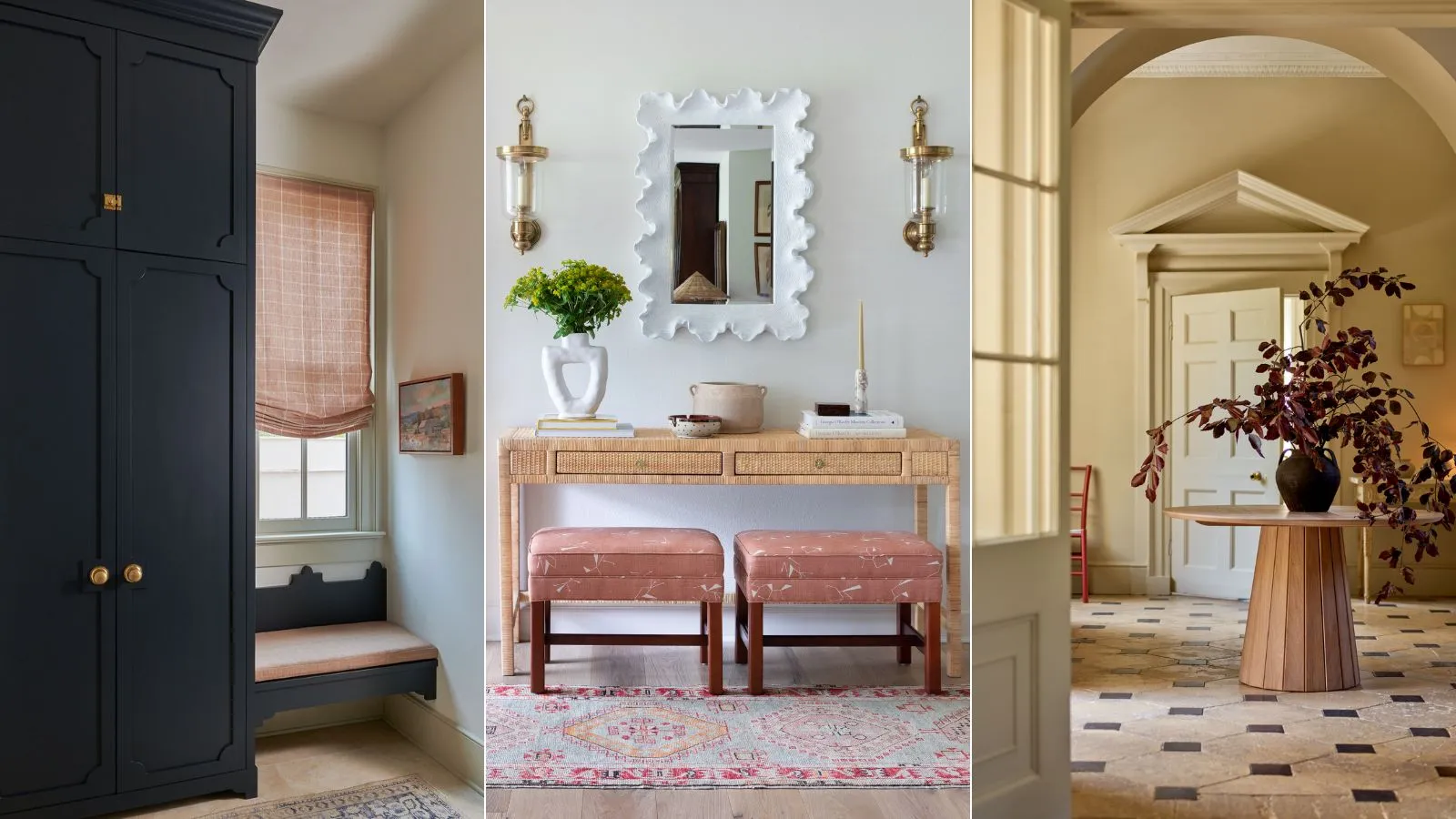
An empty entryway wall can make the first few feet of a home feel forgotten. Yet filling it with shelves, signs, baskets, hooks, and artwork can quickly create the opposite problem.
The best approach is selective. Give the wall one strong visual purpose and add storage only where daily routines genuinely require it.
Decide What the Entryway Actually Needs
Watch what happens when people enter the house. Keys need somewhere to land. Coats may need hooks. Shoes may require containment. Bags might need a temporary resting place.
Solve those habits before decorating. Otherwise, attractive accessories may soon become surrounded by everyday clutter.
A broader look at practical interior ideas can help when deciding whether an entry area needs furniture, vertical storage, or simply stronger wall decoration.
Create One Main Visual Anchor
Every small entry benefits from a focal point. That could be a mirror, framed artwork, narrow console, statement light, or grouped set of two or three coordinated prints.
Mirrors are especially useful in tight spaces because they add visual depth without using floor area. Position one where it reflects light or an attractive interior view rather than a messy storage zone.
Keep Scale in Proportion
A tiny picture floating above a long console often looks accidental. Likewise, oversized artwork can overpower a narrow entrance.
Aim for a wall piece that visually relates to the furniture beneath it.
Add Storage Without Building a Drop Zone
Entryway storage works best when each item has a clear job. One small tray can catch keys. Two hooks may handle everyday jackets. A covered basket can hide items that would otherwise remain visible.
For homes built around quieter, less chaotic routines, restful home styling offers a useful reminder that reducing visible objects often matters more than adding extra decoration.
| Entryway Feature | Main Purpose | Clutter Risk |
|---|---|---|
| Wall mirror | Light and depth | Low |
| Small hooks | Coats and bags | Medium |
| Console table | Landing surface | High |
| Closed basket | Hidden storage | Low |
Add Life With Natural Details
Plants can soften an entryway that feels overly hard or architectural. A small plant on a console works where natural light is available, while a taller floor plant can fill a narrow unused corner.
Natural textures such as cane, timber, stone, or woven fibers can also connect the entrance with outdoor-inspired spaces without making the area look themed.
Use Lighting as Decoration
Entryways frequently rely on a single ceiling fixture, which can make the space feel flat. A small table lamp, wall sconce, or warmer overhead bulb can change the mood dramatically.
Light also helps artwork and mirrors feel intentional. Rather than adding another decorative object, better illumination may provide the missing layer.
Where Entryway Decorating Often Goes Wrong
The most common mistake is turning every available inch into storage. Rows of hooks invite more hanging items. Open shelves collect mail, bags, receipts, sunglasses, and objects that were never meant to live there.
Another problem is decorating for appearance without considering movement. A deep console may look attractive but become frustrating in a narrow passage. Preserve the path first, then style what remains.
Frequently Asked Questions
What can I put on a blank entryway wall?
A mirror, artwork, shallow shelf, hooks, or a narrow console arrangement can work. Pick one main feature before adding smaller accessories so the wall keeps a clear visual hierarchy.
How do I make a narrow entryway look bigger?
Use a mirror, lighter wall colors, limited furniture, good lighting, and vertical decoration. Keeping the floor relatively open can make a greater difference than adding more decorative pieces.
Should an entryway have a console table?
Only when there is enough walking clearance and you need a landing surface. Very narrow entrances often work better with wall-mounted storage or decoration instead.
Create a Calm First Impression
An inviting entryway doesn’t need to display everything that makes a home feel personal. Give the wall one strong focal point, support everyday routines with restrained storage, and protect the walking path.
The entrance will feel more welcoming when visitors notice the space itself rather than a collection of objects competing for attention.