

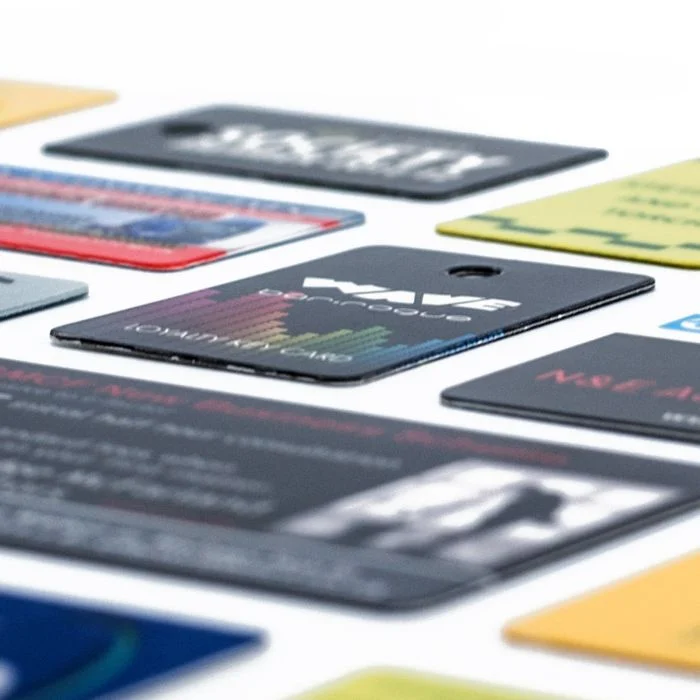
Most marketing runs on screens and disappears the moment someone scrolls past it. Physical items stick around. Plastic cards and key tags are two of the most effective physical branding tools a business can use, because they don’t get closed, skipped, or scrolled away. They sit in wallets and hang on keychains, showing up every time a customer reaches for their keys or pays for something. They work quietly, consistently, and for a long time.
Here’s why they matter for branding and what they do for your business.
1. Plastic Cards and Key Tags Strengthen Brand Visibility
Every time a customer sees your logo, they become more familiar with your brand. Physical cards and tags create that visibility without any additional spend after the initial print run.
Constant Brand Exposure on Wallets and Keychains
Cards sit in wallets. Tags attach to keychains. Both travel everywhere the customer goes. Unlike a social media post that disappears from a feed, a card or tag stays visible for months or years without any ongoing cost. Where customers go, so does the brand:
- Grocery stores, coffee shops, and restaurants
- Gym bags, car dashboards, and work desks
- Anywhere they pay, scan, or reach for their keys
Repeated Touchpoints Create Familiarity
Brand familiarity grows with repeated exposure. Every time a customer pulls out their card at checkout or spots your tag on their keys, they get another impression of your brand. These micro moments of recognition build the kind of familiarity that drives return visits and referrals.
Small Items Produce Long-Term Brand Recall
Size doesn’t limit impact. Studies on branded merchandise consistently show that physical items with a logo generate higher recall than digital ads. Cards and tags are compact, but their daily presence keeps the brand in the customer’s line of sight far longer than any screen-based impression.
2. Make Brands Look More Professional
How a business presents itself physically says something about the quality of what it offers. Printed plastic cards and tags communicate that a business takes its identity seriously.
Design Consistency Builds Trust
Customers associate professional presentation with reliability. Cards and tags that match the brand’s colors, fonts, and logo signal that the business is consistent and organized. What consistent design communicates:
- The business pays attention to detail
- The brand experience will be the same every time
- The company is established, not temporary
Logos, Colors, and Typography Reinforce Identity
Every visual element on a card or tag reinforces how the brand wants to be remembered. Color psychology influences buying behavior, and placing the brand’s colors in the hands of customers reinforces the emotional association the business works to build across all other channels.
Physical Branding Signals Reliability and Quality
Thin, flimsy cards or poorly printed tags create the wrong impression. Well-made plastic cards with clean printing signal durability and attention to detail, which transfers to how customers perceive the brand overall.
3. Support Customer Loyalty
Loyalty programs work best when they’re easy to use. Physical cards and tags are one of the simplest loyalty tools a business can put in a customer’s hands.
Membership and Rewards Programs
Cards and tags are the physical anchor of most loyalty programs. Customers feel a sense of membership when they hold a card tied to a brand they return to. This tangible connection strengthens the relationship in a way that a digital loyalty app often doesn’t replicate.
Common uses for loyalty cards and tags:
- Coffee shops tracking visits toward a free drink
- Gyms issuing membership tags for entry scanning
- Retailers linking purchases to reward points
- Service businesses building repeat client programs
Easy Scanning, Tracking, and Redemption
Barcodes, QR codes, magnetic stripes, and RFID chips can all be embedded in plastic cards and key tags. This makes scanning and tracking purchases, points, and redemptions fast and accurate at the point of sale.
What these features enable:
- Instant loyalty point scanning at checkout
- Membership verification at entry points
- Reward redemption without the customer needing to remember anything
- Purchase history tied to each card or tag
Encouraging Repeat Visits and Retention
When customers have a card in their wallet tied to points or perks, they have a reason to come back. The physical reminder of what they’ve accumulated keeps the business top of mind when it’s time to make a purchasing decision again.
4. Are Cost-Effective Marketing Tools
Compared to digital advertising, print campaigns, or broadcast media, plastic cards and key tags deliver a strong return on a low initial investment.
Low Production Cost Compared With Ongoing Ads
Digital and print ads require repeated spending to maintain visibility. Cards and tags are produced once and continue working without any additional cost. Key cost advantages:
- No recurring fees after the initial print run
- Per unit price drops significantly in bulk orders
- No algorithm changes or platform rules to navigate
Long Lifespan Increases Value
The average plastic card lasts two to three years in active use. Over that period, every scan, glance, and handoff delivers another brand impression. As a result, the cost per impression over a card’s lifespan is extremely low compared with almost any other marketing format.
Bulk Use Works Well for Promotions and Campaigns
Cards and tags are easy to produce in large quantities for seasonal promotions, product launches, or new customer acquisition campaigns. Distributing them at events, in-store, or as part of a welcome package puts the brand physically into new hands with minimal per-unit cost.
5. Improve Customer Experience
Good branding is not only about visibility. It’s also about how customers feel when they interact with a brand. Cards and tags improve that experience in practical ways.
Convenient to Carry and Use
Cards fit in a standard wallet slot. Tags clip to a keychain in seconds. Customers don’t have to open an app, remember a login, or search for a loyalty number. The physical format removes friction from every interaction.
Helpful for Access, Check-In, or Point Tracking
Beyond loyalty, cards and tags serve functional purposes that make customers’ daily interactions smoother:
- Gym membership cards for quick entry scanning
- Hotel key cards that double as branded touchpoints
- Retail loyalty tags that speed up checkout
- Event access passes that work across multiple visits
Each of these functional moments is also a brand moment.
Create a Tangible Brand Touchpoint
Physical items create a different kind of connection than digital content. Holding something with a brand on it is more memorable than seeing it on a screen. This tangible touchpoint is one reason physical branded items consistently outperform digital in brand recall studies.
6. Can Drive Word of Mouth
Branded items that people notice and comment on extend a brand’s reach beyond the original recipient.
Attractive Cards and Tags Are Easy to Notice
Cards with bold design or unusual finishes attract attention naturally. When a customer pulls out a well-designed loyalty card at a register, people around them notice it. Design features that get noticed:
- Spot UV or matte finishes that stand out from standard cards
- Bold color combinations that match a strong brand identity
- Embossed logos or foil details that feel premium in hand
Customers Are More Likely to Keep and Show Them
People keep physical items they find useful or visually interesting. Cards that look good and serve a practical purpose stay in wallets far longer than digital offers stay on phones. That extended presence creates more opportunities for the brand to be seen.
Branded Items Can Start Conversations
When someone notices a card or tag and asks about it, the customer holding it becomes a brand advocate. That conversation is more persuasive than any ad because it comes from a peer rather than from the brand itself.
Best Practices for Branding With Cards and Tags
Getting the design and format right is what separates cards and tags that work from ones that sit unused. These three practices make the biggest difference.
The most effective cards and tags are clean and easy to read. Too much information competes for attention. Lead with the logo, use the brand’s colors, and leave enough space for the design to breathe.
Include Logo, Contact Details, and a Clear CTA
Every card or tag should include:
- Company logo prominently placed
- Website or contact information
- One clear call to action, such as “Scan to earn points” or “Show this at checkout”
Match the Format to the Campaign Goal
Choosing the right format makes the piece more effective and more likely to be used:
- Key tags: Best for loyalty programs, frequent visit rewards, and gym or club memberships
- Wallet cards: Suited for gift cards, membership credentials, and referral programs
- Both: Work well for branded giveaways, welcome packages, and event promotion
Takeaway
Plastic cards and key tags work because they combine branding, retention, and practicality in one small format. They put the brand in front of the customer every day without any additional spend, and they create the kind of repeated physical impressions that build real familiarity and loyalty over time.
Duracard designs and prints custom plastic cards and key tags for businesses of every size. Every order comes with free design help from a team that understands how branding works, beyond how printing works. If you need a simple numbered key tag for inventory management, a full-color loyalty card with a barcode, or a complete branded card system for a new rewards program, Duracard handles the design, production, and delivery without the usual back and forth.
Orders are available in small runs or large bulk quantities, with fast turnaround and no hidden fees.
Read More: How Do Custom Key Tags Strengthen Customer Retention Programs